Monday, May 14, 2012

MY NEW SERIES OF BOOK REVIEWS--

Starting a New Series for Multiple Blog Sites:
Reviews of Pioneering American Latina Authors

Last month, at the invitation of Jesus Trevino, outstanding author and host/writer of the esteemed blog Latinopia.com (http://www.latinopia.com/ ), I began writing book reviews of modern American Latina authors who are now regarded as "pioneers" in modern American Latino/a literature. My intent is to write one book review per month for a 12-month period. These reviews are aimed for Latinopia.com and may be posted on La Bloga as well (http://www.labloga.blogspot.com/) as on my site here.

In choosing the Latina authors for this series, Jesus and I collaborated, starting with his recommendations. Then I reviewed lists of Latina winners of the famed American Book Awards beginning in the 1960's and checked other prestigious national awards given in the United States. Almost all of the women in this series received the American Book Award, with a couple of them winning other major awards instead. I shared this list with Jesus, and we agreed on the 12 books to consider. In the spirit of modern "pioneers," we also limited our list to the time period spanning the 1970's-1990's, when the impact of Latinas publishing in English began in earnest, prior to the year 2000. The reviews will be presented in chronological order according to the books' publication dates.

The selected group of pioneer Latinas represents various genre: short fiction, novels, poetry, and nonfiction. Geographically, the authors come from across the United States: the Northeast, Southwest, the West, and other parts of our nation. All these women have one very important commonality: They blazed trails in bringing the Latina voice to the tapestry of our evolving Latino literature in the modern era. They have thus enriched our literature and expanded our horizons of human understanding. These women are artists in the greatest sense of the word.

It is Jesus' hope, as well as my own, that--after this series of pioneeer Latina authors--the spotlight can shift to contemporary American Latina authors; for, as the years pass, the list of top writers continues to expand. Book reviewing is fun and enriching for a number of reasons, and I hope to share my enjoyment with you.

The first of the series was published last month (see below): Nicholasa Mohr's autobiographical novel, Nilda (1974). The second book review will be posted soon: Estela Portillo Trambley's Rain of Scorpions and Other Writings (1975). All the reviews will appear first on Latinopia.com, then possibly on La Bloga, then definitely on this blog. Thanks so much for tuning in each month.


Monday, March 26, 2012

BOOK REVIEWS:
Two Iconic Authors: A Latina Pioneer; and First Hispanic-American Pulitzer-Prize Winner

My two book reviews below first appeared in Jesus Trevino's amazing, enlightening blog, Latinopia.com. He granted permission for cross-posting these reviews here.
- - - - - - - - - - - - - - - - - - - - - - - - - - - -

NICHOLASA MOHR:
Author of Nilda (1974)


Nicholasa Mohr (b. 1938) has been described as the most prolific and renowned Puerto Rican-American novelist. Born and raised in the Bronx, New York, Mohr represents the “Nuyorican” writers (“New York Puerto Ricans”), a group that first rose to national prominence for their considerable talents in the 20th century and who continue to attract readers today.

Since Puerto Ricans officially became American citizens in 1917, Mohr’s antecedents, though strongly tied to their island culture, were not immigrants, but migrants rather, in the often-alien, unwelcoming American city. Mohr grew up in the 1940’s, with World War II a gauzy backdrop, and suffered the proverbial slings and arrows of prejudice and discrimination.

That Nicholasa Mohr became a published writer when she did is a stroke of luck for Hispanic-American literature. As a young woman, she was first and foremost a visual artist. By chance, her art agent once asked her to write 50 pages of childhood reminiscences for a possible book project. Although he subsequently rejected this writing in a humiliating critique, she shared this small manuscript with a chief editor who had solicited her artwork for someone else’s book. Mohr’s illustrations for that book were turned down, but the editor liked the 50 pages of reminiscences and contracted Mohr to write a novel based on those. Mohr completed the novel, NILDA, that same year. The rest, as they say, is history.

With the well-received publication of NILDA in 1974, Mohr cemented her place in American literature. She was one of the earliest Hispanic-Americans to publish her writings in English in the United States and one of the first to write a young adult book in English. Mainstream America at that time had little interest in publications about Latino people. But Nicholasa Mohr’s book successfully crossed the divide. Since 1974, she has been the most productive and most renowned Nuyorican novelist, earning numerous major awards and publishing in a variety of genres: novels, short stories, novellas, and nonfiction. Her influence in other authors’ development has been significant, not just through her 10 published books, but also through her workshops and university teaching.

Nilda recounts the life of a Puerto Rican family in the Bronx from 1941 through 1945, as seen through the central consciousness viewpoint of the only daughter in the family and the youngest child, Nilda. Her family is poor, large, and as diverse in personality and outlook as her neighborhood. But these nine people, with their varying degrees of dysfunction and tension, are the source of stability and love that enable Nilda to navigate her childhood intact. She, as well as other Puerto Ricans, regularly encounters naked racism and marginalization, often at the hands of authority figures who should, paradoxically, be protecting and nurturing her: neighborhood policemen, nuns and priests at a Catholic summer camp, her teachers at school, and social service workers allegedly providing economic assistance for struggling families like hers. Worse, these perpetrators of racism are seemingly oblivious to their cutting words and actions. After policemen abuse her kind-hearted neighbor, Nilda notes that these cops “loomed larger and more powerful than all the other people in her life.”

The novel begins when Nilda is 10 years old and ends when she is 14. In this span of time, World War II begins and ends. Also, Nilda finds and loses religion; loses her stepfather; learns that her beloved brother Jimmy has impregnated and abandoned a young woman who is then sheltered by Nilda’s mother; helps care for her mentally unbalanced aunt; witnesses a policeman falsely accuse her friend of a crime and almost beat him to death; and endures other calamities that would have destroyed a lesser child. Through it all, Nilda is alternately petulant and carefree, defiant and obedient, aloof and moved to tears, frightened and resolute. Her best friend becomes pregnant and drops out of school. But Nilda exhibits the resilience of her mother and moves forward despite the biggest loss of all.

The Ramirez family is the broad backdrop of this narrative. Nilda’s mother, Lydia, is the matriarchal rock, an interminable font of patience, practicality, and initiative. She shepherds her family through quarrels, sickness, and despair and somehow manages to keep food on the table and consejos always flowing. Her strength comes from a deep religiosity that she tries to impart to her children, especially to Nilda, and from an almost martyr-like acceptance of her hard life. Her dreams are pinned on her children, especially her daughter, whom she constantly exhorts to study hard and make something of herself.

Nilda is tugged between her mother’s spirituality and her stepfather Emilio’s communistic, nihilistic rejection of faith. The parents’ polarity symbolizes the contradictions in the family members themselves: There is Jimmy—handsome, dashing, and utterly charming—yet embroiled with drugs and thugs and breaking his mother’s heart. There is Victor, the scholar and gentleman most suited for success, who is first to enlist in war and dash his mother’s dreams. There is Aunt Delia—old, deaf, and caustic—whose obsession with ghoulish newspaper reports is trumped by her vulnerability, which engenders the family’s loyalty to her. In a poignant scene toward the end of the book, we learn that Nilda’s mother, whose devotion to her family was the engine that drove her life, had deep regrets that embodied the most heart-wrenching contradiction of all.

People are the main ingredient of storytelling. People drive the plots and themes and embody the heart and soul of the structure we call literature. When people as literary characters are authentic and speak to us in voices we recognize, in voices that resonate with our own experiences, the written piece is successful. And if these characters engage in self-examination and reflection and share their insights with us, thus expanding our own self-knowledge as they reveal their own…well, the literature soars and takes us up with it.
Perhaps because Nilda is a young adult novel, or perhaps because it is a debut novel, it falls short in the latter criterion of excellence. Although the child Nilda is sympathetic and authentic, she rarely engages in reflection, even as a teenager, and this renders her less multi-dimensional than she could have been. The central consciousness viewpoint of the book does not allow us to enter the minds of the other characters, but Nilda’s thoughts could have been explored further.

Literary critics of ethnic-minority works have pointed out that early writers often focus on their personal minority experiences, which often include prejudice and various levels of cultural and racial oppression. It is the evolution of these authors’ art that eventually expands their creativity outward, to broader, more universal themes. Nilda, as a pioneering novel, captures the unique cultural experiences of New York’s Puerto Ricans in the 1940’s and therefore secures a solid place in the history of our literature as such. It still resonates decades later because its cultural depictions of family, love, individual pride, and resilience in the face of hardship still matter.

*   *   *   *  *   *   *   *   *   *   *   *   *   *   *   *   *   *

OSCAR HIJUELOS:
Author of Beautiful Maria of My Soul (2010)

Oscar Hijuelos, acclaimed Cuban-American author of eight books, wrote Beautiful Maria of My Soul (2010) as a prequel to his Pulitzer Prize-winning novel, The Mambo Kings Play Songs of Love (1986). In the prequel, Hijuelos gives readers the back story of the supremely beautiful woman who broke musician Nestor Castillo’s heart in The Mambo Kings. And what a back story it is!

The book covers 45 years, starting with Maria in Cuba at the age of 17 and ending with her in Miami, Florida, at the age of 62. In this span, we see the pre-Castro island nation in all its glory, beauty, and seediness. We learn about the decline of life for Cubans once Castro assumed power, and we follow Maria and her toddler daughter, Teresita, when they emigrate to America with hundreds of others and struggle to build a new life.

In this span, Hijuelos lays the seeds for his themes and slowly unwraps each one like gifts we anticipate but also dread: the fleeting nature and complexity of love, even true love; the losses and suffering that even the good endure; the seeming indifference and cruelty of God; the importance of memory in our lives; and the essential role of family.

Beautiful Maria Garcia y Sifuentes is a 17-year-old naïve, illiterate country girl living in extreme poverty in a tiny village in western Cuba. Her two brothers, teenaged sister, and beloved mother have one by one died untimely deaths, leaving her broken-hearted and alone with her sometimes-abusive, sometimes-tender father. In 1947, Maria decides that she must seek her independence and leaves the only world she’s ever known to travel to Havana, a bustling, frightening city filled with goodness, coarseness, and evil. She becomes a dancer in a rundown nightclub and alone must navigate the dangers and temptations of the city’s night life.
Her gift—extreme beauty of face and body that draws barrages of attention—is likewise a curse. She tires of men trying to seduce her, trying to impose their coarseness upon her, and wonders if it’s possible to find a good man who can love her for more than beauty. She appreciates her gifts, however, and uses them to advance her career, rising to be the featured dancer in the club and working as a model.

Virginal Maria eventually takes up with an older man, Ignacio, who has a shady reputation as a small-time gangster but who is generous with his attention and money and provides her with respectability and stability. Like her father, however, he sometimes beats and denigrates her; and Maria decides to leave him. During a violent argument with Ignacio, she meets Nestor Castillo, a poetic, soulful, handsome musician who rescues her from Ignacio’s rage. Nestor’s humility and saintliness, as well as his physical beauty, immediately appeal to Maria; and she and Nestor soon become lovers. Their passion is intense and endless, depicted by the author in highly graphic, explicit detail.

Nestor, for all his talents in and out of bed, is poor and simple. His gifts—besides the anatomical ones well-documented by Hijuelos—lie in his songwriting and his undying commitment to Maria. But Maria, accustomed to luxury after living with Ignacio, can only imagine a life of poverty if she marries Nestor, who proposes to her repeatedly, each time being rebuffed. Although enamored of Nestor sexually, she is not sure she truly loves him, plus her financial comfort trumps life with Nestor. She thus returns to Ignacio, and the broken-hearted Nestor eventually leaves with his older brother, Cesar Castillo, for New York to start a new life. (The Mambo Kings depicts the brothers’ lives from this point forward.)

Maria takes pride in her rise from poverty and learns to read and write. As the years pass, her father, her last surviving family member, dies. Maria feels the loss of this last link with family very deeply. She also misses Nestor and realizes that she made a mistake in rejecting him. He writes her wistful letters of undying love, and reminds her of a song he’s perfecting in her honor: “Beautiful Maria of My Soul.” Regarding Ignacio, she discovers several secret affairs. Each loss oozes a layer of hardness on Maria’s soul. Once devout, she now questions God and mocks him. She realizes that even love is “ephemeral and useless....like air.” The sweet, soft-hearted girl has become taciturn, critical, and jaded.

Maria comes to believe that having her own child will bring her happiness, and she wants Nestor to be the father. Although she learns that Nestor is now married and has two children, she believes Nestor still loves her, since he’s been writing letters to her since his departure to New York. She travels to New York to reunite with him and, hopefully, to be impregnated by him. Despite great qualms, Nestor agrees to meet Maria secretly and proceeds to ravage her like in old times. What happens after this secret reunion changes their lives forever and leads to great tragedy for both of them.

Hijuelos’ book is beautifully poetic in language and insights. He writes in a conversational style, filled with Cuban dialect, slang, and code-switching (alternating between English and Spanish), which makes his writing full of color and authenticity. Hijuelos creates memorable characters who are imperfect, who fill us with admiration and with revulsion. We can admire the tender-hearted Maria, but we can’t admire the young woman who chose money over love, or who, at the age of 50 and 60, is vain and largely unemotional. Nestor’s modesty as a young Cuban fills our hearts with respect, but his sexual foray as a married man shows his weakness. Still, these characters are human, and we can relate to them and learn from them.

Hijuelos has been criticized in the past for filling his books with too much sex, oftentimes in crude depictions. In this book, he can indeed be faulted for this. Although some sex scenes are described in evocative, literary language, the book could easily be reduced by dozens of pages with the elimination of redundant erotica that sometimes seems gratuitous. Hijueolos can also be faulted for his relentless repetition of “beautiful” throughout the book, and his descriptions of Maria’s beauty so oversaturated to the point of caricature. Again, this book could have been slimmer and still have been convincing.

No book is perfect. The importance of Beautiful Maria of My Soul is the author’s deft, unique treatment of how loss and unrequited love cut mercilessly into the human spirit; but also of how extremely humanizing family connectedness is, and how time and memories can mellow us out, if we remain open to possibilities, and we can find love in the most unexpected places. Hijuelos’ book expertly convinces us of this.


# # # #


TAGS: Oscar Hijuelos, Pulitzer Prize, Cuba, Cuban-American, Mambo Kings, Beautiful Maria of My Soul, New York, Nestor Castillo, Cesar Castillo, musicians, Thelma T. Reyna.


Monday, December 12, 2011

Latinos to Be the Majority
of U.S. Population by 2050:
Implications for Latina/o Authors

The face of America is changing rapidly, according to the latest U.S. Census data. If prognostications bear out, Hispanics (the term used in the Census) will be the dominant ethnic group in our nation by 2050. This would be a sea change for our country and one with many implications that we must seriously consider, as discussed below. (The article below first appeared in Aurelia Flores' blog, http://www.powerfullatinas.com/ last month, and is posted here with her permission.)

One of the ramifications is the increased opportunities this new majority group could and should present to Latina/o authors nationwide. Modern Hispanic-American literature, as I've previously written about here, has grown significantly since the early 1960s. With a future nation whose majority is Hispanics, the demand for inclusion of our writings in America's English classes in kindergarten through the university level, in literary anthologies and textbooks, should be more pronounced. This, in turn, could and should have a ripple effect on the entire publishing industry, with its concomitant marketing programs, speaking engagements, and all the trappings that come with big publishing house releases.

But we Hispanic authors must lay the groundwork for this new era of higher literary visibility and prominence. Not only must we continue to hone our craft and increase our productivity, but we must be sure to groom the new generations of writers. This will entail, as discussed below, investing our time and attention more heavily in our children's education. Not only as parents, but as participants in a democratic society, we need to insure that our educational system receives all the resources necessary to boost it, to make it a strong vehicle of growth and enlightenment for all our nation's children, and particularly for our Hispanic children, who often lag behind others.

We need to keep abreast of educational issues and concerns more strongly than has been the case in the past. We need to monitor that educational programs are not the first tier of budget slashing as an automatic political response when economic times are hard. This has been the case this year and last, and most other times of crisis that I can recall. Cutting education is often a knee-jerk response by politicians; and, unfortunately, the citizens oftentimes just go along with it quietly. This must change.

Education in the United States is hurting a lot right now. Critics abound on the left and right of the political spectrum, and Congress often makes decisions that run counter to what educators know is the right path to take. Besides cutting education budgets, Congress, and many states as well, jump to charter schools, or vouchers, or other "silver bullets" that they mistakenly believe will result in better educational outcomes for our students. But--as a lifetime educator and school administrator--I can tell you that a good educational system is one that literally "takes a village": well-trained educators, devoted parents, and an engaged community. Let us work toward establishing this in each of our communities, and collectively, we can build an educational system that will prepare our children for the changes that we will all face in America.

As individual authors, we must engage with our reading public more than we now do. Can we mentor young writers? Can we visit schools and community writing groups to share our knowledge and inspire others? How can we individually and collectively pass our knowledge to aspiring writers and help a new wave of authors come to the fore? Yes, these are things we already do. But how can we expand these strategies? Again, we need to lay the groundwork for a broader pool of Latina/o authors to step up to the plate in the coming decades, to contribute greatly to the fabric of American Literature, and to expand the body of literature created specifically by Hispanics for the betterment of all.

- - - - - - - - - - - - - - - - - - - - - - - - - -
The post from Powerful Latinas follows:

LATINO VOTERS: INCREASING VISIBILITY, INFLUENCE

by Thelma T. Reyna

The face of America is undergoing vast changes, and most of these pertain to “Hispanics,” as the 2010 United States Census referred to the Latino population. Because the growth of the White population in our nation is very small (one percent) and is decreasing, Whites are predicted to be a minority in about 40 years. At that point in our nation’s history, Hispanics are slated to become the largest ethnic group.

The shift has been rather rapid, with much of the change occurring in the last decade alone, in which Hispanics accounted for more than half of our nation’s growth. One out of every six Americans—over 50 million people—are now Hispanic. Latinos are expected to comprise one-third of America’s population in 40 years. In other words, one out of every three Americans will be Hispanic.

We must all be highly aware of the ramifications of this sea change. Our American society has been predicated throughout our history on the pre-eminence of the White culture, largely because our White population has consistently been the largest demographic group. Along with our country’s historical beginnings and historical evolution, plus the establishment of English as our nation’s language, a Eurocentric culture has flourished, has led our nation in all aspects of life, and has been the face of America to the world.

Hispanics and American Diversity

Diversity is one of our country’s greatest strengths, however, and the infusion of increasingly diverse populations through the centuries has caused other cultures to slowly take their proverbial place at the table. Traditionally, the Hispanic culture, the Hispanic people collectively and generically, have been more of an afterthought, however. There has been a diminished focus on the Hispanic peoples in the United States, and this oversight of Hispanics has often been linked to the public’s association of this demographic group with a foreign language, with Spanish.

Inclusion of Hispanics in the social, economic, and political fabric of American life has been slow, as data regarding Hispanic representation in many American institutions and endeavors have consistently shown: professorships in our universities, the halls of Congress, municipal governments, school district leadership, judicial posts, corporate board rooms, and so on. In fact, Hispanic representation in these and other significant areas of participation and leadership has lagged behind representativeness attained concurrently by other ethnic minority groups, even in areas in which competent Hispanics were ready and available to step up to the plate.
 
Preparing for Future Influence

In a democracy, when a given group of people predominates in numbers, it is incumbent upon them to willingly take up the mantle of leadership, of responsibility for the well-being and prosperity of their society. Our White fellow Americans have done this throughout our history; they have led and shaped our society through crises, wars, immense change, and needed growth. They have predominated in government and in all our institutions, in public and private sectors, and have gone out into the world to represent our nation in good times and bad.


It goes without saying that none of this predominance would have been possible, or would have been effective, without perquisite education, training, and preparation for such roles. No society can flourish without its leaders being absolutely the best they can be in every facet of their work on behalf of the people they represent and are a part of. If indeed, Hispanics become the majority group in America by 2050, as the projections indicate, and if they are to have great, positive influence in the course and fate of our nation, there is much work that must be done.


The Advocacy of Professor Pachón

If Hispanics needed to listen to any one individual regarding their future lives in America, it was Professor Harry P. Pachón, whom the University of Southern California’s Tomás Rivera Policy Institute called “among the most influential voices of his generation in public discourse about the Latino population.” Until his death earlier this month, Dr. Pachón was a USC professor of public policy and former Executive Director of the National Association of Latino Elected Officials Educational Fund.


Dr. Pachón researched and wrote about Latinos’ education, political participation, electoral practices, and racial justice. For 40 years, he examined how public policies affected Latinos and their roles in society. Not partisan or demagogic, he quietly advocated for Latinos and studied their voting patterns....He worked tirelessly to educate Latinos about the importance of voting, to register them to vote, and to promote naturalization. He also focused on public education, informing Latinos of scholarship opportunities and of how they could rise to the middle class. His influence was tremendous.

Who will fill Dr. Pachón’s shoes? This remains to be seen, but the reality remains that many Latinos are still not accustomed to being a part of the political process in America, of having a voice that will be heard and valued....


What Happens Next?

The implication of Hispanics becoming a critical mass is even more compelling when we consider that they now comprise 23% of all people below the age of 18. In California, for example, 51% of all the children are Hispanic. Nationally, the average age of Hispanics is around 35. Consider how this Latino “population bulge”—when the present children become adults—might affect our nation.


There is time to prepare American Latinos for their future as the largest demographic group, but molding young Latinos to be good citizens in our democracy involves acculturating them and affording them ample opportunities for assuming responsibility in school and civic affairs, of training them to participate in democratic processes and decision-making. Our nation needs to understand census projections and to accept the reality, if it indeed comes to pass, that Hispanics will predominate demographically. It is in the nation’s interest that this large group of Americans no longer be treated as an afterthought.


Citizens of a diverse democracy should always learn about, respect, and appreciate the cultures of others. Only by understanding what other groups value and yearn for, what their goals, priorities, and needs are, can we assure that no group shall be left behind in our nation’s progress and prosperity. Knowing one another well serves as a deterrent to discrimination and exclusion. We must do this not only for Latinos but for all our people. Starting with providing the best education we can for all children, and holding high but reasonable expectations for them, we must involve parents in our schools and partner with them to prepare all our children to be bearers of the torch, to take our nation forward.


As I said, we have much work to do, but let us engage in it with an open heart and mind willing to embrace change, because, surely, change will always keep us on our toes.


# # # #

Friday, December 02, 2011

44th Anniversary of Ground-Breaking Latino Book:
Down These Mean Streets, by Piri Thomas

Piri Thomas just died last month after a long, successful career as a novelist, poet, motivational speaker, educator....and very inspiring human being. He is best known for his memoir, Down These Mean Streets, one of the first books by a Hispanic author in modern-day American literature. His gritty, heart-wrenching memoir lives on in many languages all around our world.

My book review of Piri's book was first posted last week on www.Latinopia.com . Jesus Trevino, editor of that blog, gave gracious permission for cross-posting it here.

*            *             *              *
BOOK REVIEW:
Down These Mean Streets, by Piri Thomas

Reviewed by Thelma T. Reyna, Ph.D.

Two milestone events regarding the vaunted Puerto-Rican American author, Piri Thomas, occurred recently: He passed away last month in Northern California at the age of 83; and his iconic memoir, Down These Mean Streets, celebrated its 44th birthday. Though the first event breaks our hearts, and the second uplifts us, both attest to the longevity of Thomas’ artistry and influence and the wonderful luck our society has had in having Piri Thomas in our midst for all these years.

He died an icon, a proverbial legend in his own time. When Mean Streets was published in 1967, Thomas was one of the first modern-day Latinos to publish a book in English. He followed this break-out with two novels, a collection of short stories, and many poems, which he termed “wordsongs” and performed in varied venues all over the world. Yet it’s Mean Streets, which has been continuously in print, that cemented Thomas’ reputation as a literary tour de force and which readers most associate with Piri Thomas.

The book’s enduring fame is strongly warranted. One reviewer calls it “three books in one”: a coming-of-age saga chronicling the tragedies, crimes, and entanglements in Thomas’ life; an examination of the identity crisis many disadvantaged, mixed heritage youths undergo; and a story showing readers the bristling underside of Piri’s six years in the infamous Sing-Sing Prison of New York. Yet the author expertly weaves these separate themes together in his fast-paced, brutally authentic recreation of his difficult life growing up poor, half-Black, half-Puerto Rican, in an era of entrenched racism uglier than it now is.

The book begins in 1941, shortly before Japan bombed Pearl Harbor and dragged the United States into World War II. To 12-year-old Piri in New York’s Harlem during the “Great Hunger called Depression,” the big “rumble” means that his father now has a decent job in an airplane factory. Otherwise: “Life in the streets didn’t change much. The bitter cold was followed by the sticky heat....War or peace—what difference did it really make?” Indeed, there is no distinction between Piri’s world before and after the great rumble, because his wars with his family, peers, racism, violence, drugs, crime, and society in general are just beginning and will disrupt his world for decades to come.

Piri is a dark-skinned child in a bi-racial family where, other than his Black father, everyone is light-skinned and can pass for White. He frequently clashes with his father, who treats him with less love and harsher physical discipline than Piri’s four younger siblings receive. Convinced that his father doesn’t truly love him because of his darkness, Piri seeks solace in the streets, where he navigates the unwritten laws of survival in the barrio: Prove yourself to be tough. Survive beatings at the hands of racist kids and rival gang members. Fight back hard. Don’t rat out enemies, and be “cool.” Above all, be loyal to your friends, going with the flow, “playing it smooth.” He emphasizes: “Never punk out.”

So by the time Piri is 16, he belongs to a gang, beats up rivals, uses drugs, slugs a teacher, engages in homosexuality, and robs a store: all in the name of group loyalty. When his parents move the family to Long Island for “better opportunities,” Piri is reviled by racist schoolmates, and he drops out of school to return to Harlem, often living on the streets. It breaks his mother’s heart, but Piri yearns for the security of the old neighborhood. His life of crime in Harlem, filled as it is with hunger, poverty, drug addiction, and isolation from family, is nonetheless tied to camaraderie, to unconditional acceptance, and is a siren’s song Piri cannot resist. He states: “All for the feeling of belonging, for the price of being called ‘one of us.’ Isn’t there a better way to make the scene and be accepted on the street without having to go through hell?”

Piri undertakes a double-layered odyssey to discover who and what he is. On the one hand, it’s a physical journey that takes him, as a teenager, through the Deep South, around the world with the Merchant Marines, and back and forth between Harlem and Long Island. Outside of Harlem, he faces discrimination almost everywhere he goes. It seems that Piri seeks a place that will prove his worldview wrong, that he wants proof that his skin color does not determine his value as a human being. Unfortunately, in these journeys, Piri does not find such a place.

On another layer, his odyssey is highly personal and emotional as he struggles to believe that he is loved fully in his own family. He tries to reconcile his affection for his family with his bitterness toward their “whiteness.” It’s an eternal battle in his heart. His utter devotion to his mother opposes his antipathy toward his father, whom he sees as having rejected his own Black heritage with lies about his lineage. Piri’s hatred of Whites is profound, but this creates immense conflict. He says: “It was like hating Momma for the color she was and Poppa for the color he wasn’t.” He also states: “It ain’t just that I don’t wanna be what I’m supposed to be, it’s just that I’m fightin’ me and the whole goddamn world at the same time.” It’s one of the book’s great ironies that, as Piri struggles to win full acceptance from his family, he rejects them and ostracizes himself.

An armed robbery in which Piri shoots a police officer and is almost shot to death lands him in prison, where, with time, he finally finds himself—through carefully choosing his con friends, studying every major religion, attending classes, and eventually turning to writing. “Every day,” the author writes, “brought a painful awareness of the sweetness of being free and the horror of prison’s years going down the toilet bowl.” He sought “a release from the overpowering hatred against a society that makes canaries out of human beings.” In a heart-wrenching reflection, he adds: “I wanted to tell somebody I wanted to be somebody.” The peace and release he ultimately finds are an apt denouement to his evolution.

Down These Mean Streets is a gritty, unflinching portrayal of one man’s decline and renascence. Piri Thomas’ rat-a-tat-tat dialogue injects a sensual immediacy that grabs the reader and doesn’t loosen up. The economical descriptions of the people, good and bad, who cross Piri’s path and fill his life are true-to-life. But the greatest treasures between the book covers are Thomas’ thoughtful, lyrical passages that underscore his renown as a poet. When Piri most doubts himself, when he most fervently fishes in his mind for answers to his fears, when he most reflects upon his learnings in prison—and his realization that, as he says, “Nothing is run the same, nothing stays the same. You can’t make yesterday come back today”—the author’s poetic words soar through the air and lend a gentle, almost spiritual layer to his book.

# # # #

Tuesday, October 04, 2011

PART II:  The Evolution of American Latina/o Writing: Some Current Authors

Part I of this topic reviewed the early years of Hispanic literature in the United States, starting with one of the first books published in English, a novel printed in 1872 by María Amparo Ruiz de Burton, writing under the pen name C. Loyal. I discussed recurrent themes in previous centuries and focused on the "Chicano literary renaissance" of the 1970's and 1980's. Part II carries us forward into the latter part of the 20th century and contemporary times.

This article was first published recently in Aurelia Flores' blog, "Powerful Latinas," under a different title and in a slightly different form.


Some of the best-known Latina/o authors today got their publishing start in the 80’s, 90’s, and in the early 2000’s. Many of these literary stars graduated from university creative writing programs, which afforded them better access to publishers and other influential contacts in the writing industry. Examples are Denise Chavez, actress, playwright, and novelist; Sandra Cisneros, whom many consider the best-known American Latina author today, and author of the iconic House on Mango Street; Julia Alvarez, author of the best-selling How the García Girls Lost Their Accents (1991); and Oscar Hijuelos, the first American Hispanic, male or female, to win the coveted Pulitzer Prize for fiction, with his sexy novel based in Cuba, The Mambo Kings Play Songs of Love (1990). The prequel to this bestseller, Beautiful Maria of My Soul, was published this year.

Some modern authors have become national best-selling authors in the recent past, and their stars are rising fast. This includes New York attorney Caridad Piñeiro, author of the SIN Series of compelling paranormal romance books, including Sins of the Flesh; Daniel Silva, writer of the five blockbuster political thrillers starring Gabriel Allon, such as Prince of Fire; and Junot Díaz, highly lauded author of the short story collection, Drown (1996) and the Pulitzer Prize-winning novel, The Brief, Wondrous Life of Oscar Wao (2008).

Other prominent Latina/o authors today, as was sometimes the case with our early literary pioneers, are college and university professors and thus perhaps have a more steady access to publishers. Examples are James Diego Vigil (University of California, Irvine); Susana Chávez-Silverman (Pomona College, California); Teresa Dovalpage (University of New Mexico, Taos); Mike Padilla (UCLA); and Sandra Cisneros (Our Lady of the Lake University, San Antonio, TX).

THE TALENT AND PRODUCTIVITY CONTINUE!

There must be a new Renaissance going on! Here are some of the exciting, highly talented American Latina/o authors today who are winning awards, winning fans, and making their marks on our literary world in different genres. (This list is by no means comprehensive, and I apologize for my omissions. I plan to continue learning about as many of our Latina/o authors as I can and share information about them in future blogs here.) Authors’ names are followed by only one title, which is meant to be a sampling of their work. Many of these authors have published multiple works. Some authors appear in more than one genre, a testament to the versatility of our Latina/o writers:

MEMOIRS: David Pérez, WOW! A South Bronx Memoirito of Growing Up in Catholic Schools; Randy Jurado Ertll, Hope in Times of Darkness: A Salvadoran-American Experience; Susana Chávez-Silverman, Scenes from La Cuenca de Los Angeles.

“CHICK LIT”: Marta Acosta, Casa Dracula series; Margo Candela, Life Over Easy; Mike Padilla, The Girls from the Revolutionary Cantina; Victor Cass, Telenovela; Sofía Quintero, Divas Don’t Yield; Marisa de los Santos, Love Walked In.

• NOVELS: Montserrat Fontes, Dreams of the Centaur; Reyna Grande, Across a Hundred Mountains; Chuy Ramirez, Strawberry Fields; Teresa Dovalpage, Habanera: A Portrait of a Cuban Family; Daniel A. Olivas, The Book of Want; Victor Cass, Love, Death, and Other War Stories; Melinda Palacio, Ocotillo Dreams; Raul Ramos y Sánchez, América Libre; Ana Castillo, The Guardians; Sandra Cisneros, Caramelo.

SHORT STORIES: Stephen D. Gutierrez, Live from Fresno y Los; Mike Padilla, Hard Language; Stella Pope Duarte, Women Who Live in Coffee Shops and Other Stories; Daniel A. Olivas, Anywhere but L.A.; Toni Margarita Plummer, The Bolero of Andi Rowe; Daniel Alarcón, War by Candlelight; Sandra Cisneros, Woman Hollering Creek and Other Stories.


POETRY: Luis J. Rodriguez, Poems Across the Pavement; Vanessa Libertad Garcia, The Voting Booth After Dark; Ricardo Lira Acuña, Greetings from Heaven and Hell; Yago S. Cura, The Rubber-room; Melinda Palacio, Folsom Lockdown; Luivette Resto, Unfinished Portrait.

NONFICTION: Roberta Martínez, Latinos in Pasadena; Manny Pacheco, Forgotten Hollywood, Forgotten History; Alex Moreno Areyan, Mexican-Americans in Los Angeles; Sandra Gutiérrez, Teatro Chicana: A Collective Memoir and Selected Plays; Laura Contreras Rowe, Aim High: Extraordinary Stories of Hispanic & Latina Women; Mayra Calvani, The Slippery Art of Book Reviewing; James Diego Vigil, Barrio Gangs.


• CHILDREN’S LITERATURE: Daniel A. Olivas, Benjamin and the Word; Rene Colato Lainez, Rene Has Two Last Names; Amada Irma Pérez, My Very Own Room; Meg Medina, Tía Isa Wants a Car; Mayra Calvani, Frederico, the Mouse Violinist.


• YOUNG ADULT LITERATURE: David Bueno-Hill, Mr. Clean’s Familia; Gary Soto, Dreams of the Onion.


• MISCELLANEOUS (Humor, Graphic Novels): Gustavo Arellano, Ask a Mexican!; Philip Victor, Jaguar Spirit.


This is just a sampling of what our Latina/o literary landscape looks like at this moment in time. You can learn much more about the evolution of Hispanic literature in the lands destined to become the United States, and in the early centuries of our nation, by reading Reference Library of Hispanic America (Chapter 16, Literature): Volume III, edited by Sonia G. Benson.

Also, please visit my other blog, “The Literary Self,” where you can read my reviews and feature articles about other authors not mentioned here. Finally, my own two books—The Heavens Weep for Us and Other Stories and Breath & Bone—are reviewed by others on my website, on amazon.com, and in various other blogs. See the links below, and thanks for dropping by!

www.ThelmaReyna.com
www.Latinowriterstoday.blogspot.com
www.TheLiterarySelf.blogspot.com


* * * *


Tuesday, September 27, 2011

A Brief Overview: The Evolution of Hispanic-American Literature in the United States

In this posting, PART I, I'll briefly discuss the writings of early Latinas/os in the United States. PART II, soon to come, discusses contemporary Latina/o authors in our nation and lists their works by genres, with a bit of background about them and/or their writing. Today, let's go back in time to our beginnings as American writers.

[These articles were first posted this month, with different titles, in the blog, "Powerful Latinas," hosted by Aurelia Flores. Visit her dynamic blog at http://www.powerfullatinas.com/ .]

PART I:  THE EARLY WRITINGS OF HISPANIC-AMERICANS


In 1872, a Hispanic author from Southern California, María Amparo Ruiz de Burton, published one of the first English-language books written by a Latino, man or woman, in our nation, a novel titled Who Would Have Thought It? She followed this up in 1881 with another novel, The Squatter and the Don. She used a pseudonym, C. Loyal, and funded the publications herself.

Her books were inspired by the experiences of “Californios”—native Californians of Hispanic descent—at the hands of greedy, land-grabbing politicians, corrupt officials, and squatters intent on claiming lands from coast to coast under the “manifest destiny” policy. In fact, many of the early writings by our Hispanics, both before and soon after the lands became part of the United States of America, were imbued with political, social, and cultural concerns about the role and place of Latin peoples in the new America.

LATINO/A WRITERS IN THE 20TH CENTURY

The Mexican Revolution of 1910 triggered tremendous waves of Mexican immigrants to the U.S., including upper-class, well-educated people who played critical roles in publishing and thus helped create a Latino literature. Revolutionary and counter-revolutionary themes prevailed in the journalism and passionate writings of these newcomers, but the groundwork was being laid—through their political consciousness and outspoken defense of the Mexican culture amidst a different “Yankee” worldview—for the literary “awakening” of American Latinos in the 1960’s and beyond.

And what an awakening it was! Many factors contributed to this “renaissance” among Latino writers: greater college attendance rates; a sense of belonging spurred by Latinos’ brave, heroic fighting in World War II, where Latinos earned more medals for bravery than any other American ethnic group or race; the young generation’s wide participation in the civil rights movements, including those for farm workers and women’s equality; and involvement in social protests, such as against the Vietnam War.

New generations of Latinos, in other words, were better-educated and more aware of social issues that caused them to examine and question the Establishment. This newfound awareness and courage affected Latinos’ ability to simultaneously be part of the system and, through their marginalization by certain forces, to be alienated by the system.

THE GROUND-BREAKERS: PIONEER STARS

So early publications by American Latinos were often in English, Spanglish, and Spanish, or any combination thereof. Themes centered on cultural disconnects, prejudice against Latinos, inequalities, suffering and loss. Affinity with the Mexican culture were prominent in a number of early Chicano writings, such as by the poets Abelardo Delgado, Alurista, Luis Valdez, and Rodolfo “Corky” González, author of the hugely popular epic poem, “Yo Soy Joaquín/I Am Joaquín.” Poets, in fact, were the rock stars of the early Chicano literary movement.

Other literary pioneers of the 60’s, 70’s, and 80’s were the novelist Tomás Rivera, the first national award-winner among Chicano authors; Rudolfo Anaya, author of the internationally-acclaimed Bless Me, Ultima (1972), which ranks as the most-read Chicano book of all time; Estella Portillo de Trambley, the first American Latina author to win a national award for her writing. Her book, Rain of Scorpions (1972) championed women’s rights and encouraged a new generation of American Latina writers. Estella was the first modern Latina author to gain prominence. Finally, Cherríe L. Moraga, poet and essayist, was one of the first avowed gay authors to gain prominence in Latino letters. She is best known for the now-classic, Loving in the War Years (1983).

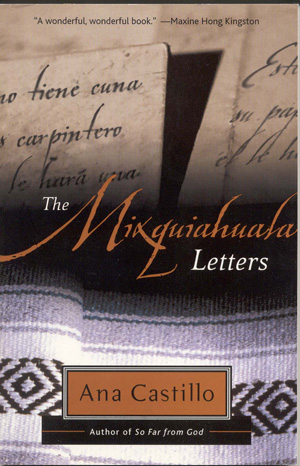
Three early pioneers in poetry are still active and popular today: Patricia “Pat” Mora, also an essayist and children’s book author who has won numerous awards for her work. Author of Agua Santa: Holy Water and countless other books, she ranks as one of the most distinguished, best-loved Latina poets in America today. Also, Ana Castillo, author of 11 books, writes short stories, essays, and novels in addition to her poetry. Finally, another outstanding, highly lauded poet is Gary Soto, who is likewise known for his children’s and young adults’ books. In 2000, he wrote his first adult novel, Nickel and Dime.

The impact of all these early authors cannot be overstated. They broke the glass ceiling, paved the road, opened the door. Clichés cannot do justice to the contributions of these and many other Latino/a writers of these decades that laid a strong foundation for a wave of authors to come as the 20th century drew to a close. A number of these literary trail-blazers were honored in the recent past by having their early works re-issued by mainstream publishers. Examples are Oscar Zeta Acosta, of “Brown Buffalo” fame; Richard Vasquez, author of the seminal novel, Chicano; Piri Thomas, Nicholasa Mohr, and Victor Villaseñor, author of the highly lauded Rain of Gold.
*     *     *     *

Soon I will post PART II:  SOME TOP CURRENT LATINA/O AMERICAN WRITERS. You'll meet talented, dynamic, engaging authors in all genres who are definitely enriching our American literary landscape. Stay tuned!


Wednesday, September 07, 2011

TWO EXCITING CALIFORNIA POETS TO KNOW, READ, AND HEAR!

“Welcome Back, Thelma, to Your Blog!”


Funny. This is what a friend told me recently when I mentioned that, after months of focusing on other writings, marketing my two books, and taking care of other commitments and NOT writing this blog, I would be returning to it. “Welcome back!”

And I’m glad to be back. In the time I’ve been away, I’ve read a number of outstanding, inspiring, highly engaging books by Latinas and Latinos that I’ve got to tell you about. This literary treasure I’ve discovered, or rediscovered, includes writings in all genres: poetry, short stories, memoirs, and novels. The authors span the United States and write with humor, pathos, and insight. What a mother lode of excellence!

TWO OUTSTANDING CALIFORNIA POETS YOU SHOULD KNOW

In today’s blog, I’m focusing on poetry and have chosen two Latinos whom I have seen at readings and with whom I’ve shared the stage. These poets read with total passion and bring their audiences energetically into their work.

Meet Ricardo Acuña: Cosmopolitan Poet from L.A.

You can’t see Ricardo at a reading, or listen to Ricardo, or read Ricardo’s poetry without being deeply moved. He’s all body language, fire and thunder, and razor-sharp insight. He tells it like it is, like his hero, poet Charles Bukowski, did: unvarnished truth, dark secrets, deep despair, brilliant humanity, and an unflagging appreciation for each precious or precarious moment of life. Ricardo speaks of everything: the good, the bad, and the ugly; but his optimism wins out every time, or at least by the end of his books.

Highly educated, with two college degrees (Stanford University in California and Columbia University in New York), Ricardo is truly bi-coastal in formal training and cultural experience. He was, as he says in his bio, “born and raised dirt-poor in Nogales, Arizona.” But he rose above such hardscrabble beginnings, winning a scholarship to a prestigious prep school as a teenager, and later living and studying in Paris, France. His artistry extends to photography, and his books are enriched with his photos from all over the world. Ricardo is the most cosmopolitan poet I know.

Yet his life has been filled with challenges that are amply reflected in his poems. In his book, Greetings from Heaven & Hell (Pichin Publishing, 2009), he speaks of “day jobs to pay for that high-faluting education.” He recounts mundane jobs he’s held, including working for farm workers and teaching high school English. But he’s never lost sight of his mission in life: “[I] know for certain that the only thing I need to do in life is write (or if not, I will drop dead.)”

Ricardo’s poetry is passionate and fast-moving, as this stanza from “let’s not argue, love” shows:

let’s not argue
love
let’s not dig the trenches
that turn into oceans
that turn people into their own islands
that turn lovers into enemy nations
for God’s sake
let’s not argue
love
let us go to sleep now....
that we may dream a good dream
when we awake together

Ricardo’s poetry speaks to today’s times, such as in “temp work”:

i fill out their applications take
their tests answer their
questions i watch them stuff
their faces at their desks joke
about birthday cake complain
about leaving early and
it reminds me of
denver-dog-days when
desperation gnawed at my
skinny belly because
of another bitch and i
don’t even want their jobs anyhow sad
and meaningless their impersonal
pool their clammy hands and bloodsucking
smiles when all i want is a
job

He paints literary portraits of people who appear to be loved ones, and of family events, oftentimes poignant and heart-breaking, as when he describes his father’s death, or broken love, or misguided youth. His poems are haunting in their starkness and reality, their sensitivity and pathos, whether they capture a moment in time, or describe a cycle of loss. Ricardo’s heart and soul are on vivid display in both of his books: Greetings from Heaven & Hell; as well as under the influence (Pichin Publishing, 2007).

Ricardo Lira Acuña’s books are available through his website, www.writeracuña.com

Meet Yago S. Cura: Soccer Fan & Poet Extraordinaire

Yago Cura describes himself as an “American-Argentine poet, librarian, and futbol cretin.” Indeed, his poetry chapbook, Bestias Inberbes (Hinchas de Poesía Press, 2009), in which Yago is co-author with Abel Folgar, is a series of “odes” to soccer stars, such as Pelé, Thierry Henry, and Daniel Passarella. These poems are bursting with colorful language as Yago addresses each athlete directly, citing his flaws and glories, in words that are alternately intellectual and slangy, burbling with machismo and good humor. To Thierry, for example, Yago says: “My, how this ode about a goofy French kid with/sniper-dreams makes for a troublesome entretemps?/....You flopped around like a/ gangly Wahoo slurping oxygen through a coffee stirrer.”

Yago’s poetry book, Rubberroom (Hinchas de Poesía, 2006) is quite distinct in tone and theme. In this autobiographical work, Yago recounts the trials and tribulations of teaching hard-headed, troublemaking teens in a New York City public school. The book is illustrated by Carlos Folgar with amazing hilarity and appropriateness, though the cartoon art is a foil for the seriousness of the protagonist teacher’s plight.

The title Rubberroom refers to a stigmatized holding room for teachers who are being investigated for disciplinary purposes, who are still on the school’s payroll, but who are not allowed back into the classroom until the individual investigations are completed and the teacher is cleared of charges. As Yago explains in “Act III: Prologue,” “...they call it the Rubberroom/ because you get to bounce/ off the walls/ like a regular retard.”

The book describes in gritty language the events leading up to the teacher’s banishment into the Rubberroom. The students, it turns out, were, from the get-go, the proverbial wild bunch: “malcontents, parolees/ ...medicated for bipolarity, pícaros, spazzes, rufianos,/ those with O.C.D./ wards of the state, stoners, the anti-social/ godfathers, and the clique-indigent.” In another poem, “Animalitos [Little Animals],” Yago further describes the students thus:

Los animalitos are antsy
and restless; that is their charge.

They sit there brawling....
like feral geezers....

And if they so desire
to melee in the lunchroom
they turn the lunchroom out....

because their puny teeth
are always beginning
to show.

Things quickly decline for the beleaguered teacher, whom the kids deride as, “Teacher Lost His Shit!” He throws a desk at the board one day, and the desk nicks a nearby kid. Hence the teacher is relegated to the Rubberroom, where a motley crew of malcontent teachers, incompetents, and burnt out folks pass the time till their disciplinary cases are settled. In the poem “Taking Attendance,” Yago describes his compatriots in a litany of adjectives, powerful words that hammer home the dysfunction of disciplined teachers: “Martyrs nailed by their principals/...marijuaneros/ rageoids, deadbeats..../ loose-cannons; the grimy/ & remorselessly insubordinate/....dilettantes, debutantes,/ shovelers-of-shit....” It’s a sad scene indeed.

Without a spoiler alert, let me say that Rubberroom marches trenchantly to its conclusion, like a small play. Yago creates a very human, very frustrated, insightful Everyman in his teacher character. He sheds light on the plight of urban education in the big city, in areas of disadvantage and—most likely—inadequate parenting, inadequate resources. Yago also shows us how the grind of daily challenges eventually burns the spirit of young, eager teachers. We see the beginning, the middle, and the end of teaching careers through the various “detainees” in the infamous Rubberroom.

Yago’s books can be purchased through www.amazon.com . His website is www.ycura.magcloud.com .